
Know your gut screening options
No two guts are the same, and neither are the checks. The right one comes down to your situation, your budget, your concerns/worries and a chat with your GP. Here’s what’s out there so you can ask the right questions
Meet the main screening options (and what they actually involve).
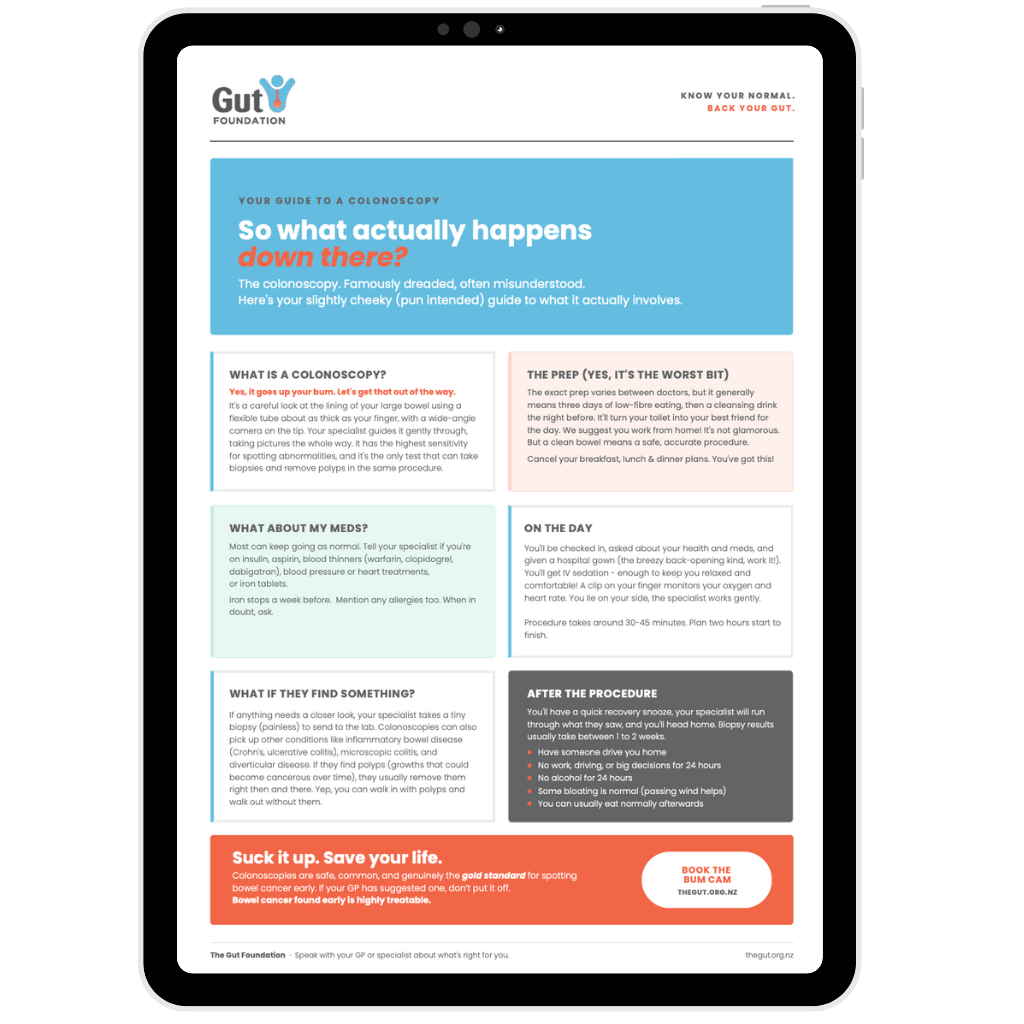
Colonoscopy
The “Bum Cam” – Less Scary Than You Think
The colonoscopy: it’s famously dreaded, often misunderstood, and yes—it involves a camera going where the sun doesn’t shine. But here’s the bottom line: it’s the absolute gold standard for backing your gut.
Grab our slightly cheeky guide to find out more.
The bottom line: Suck it up. Save your life. It’s 45 minutes of your time. Don’t put it off—found early, bowel cancer is highly treatable.
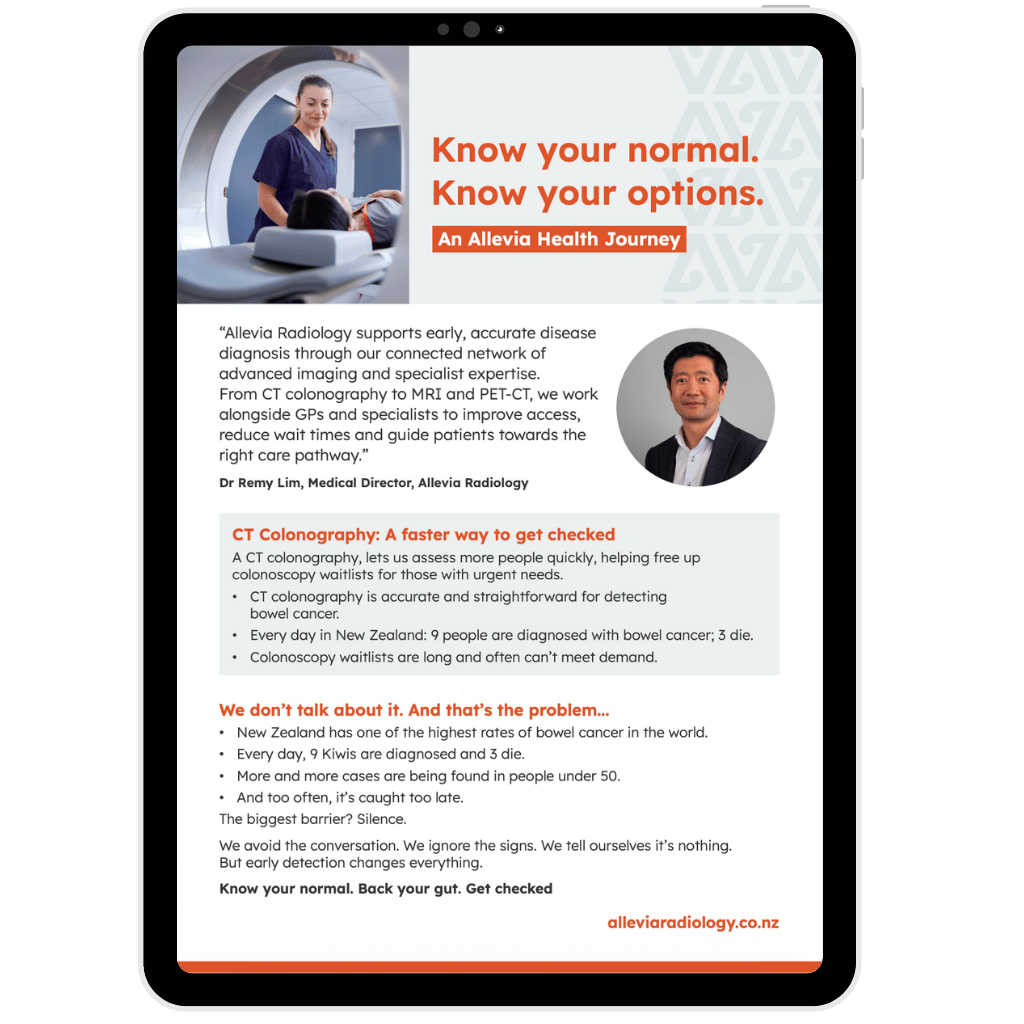
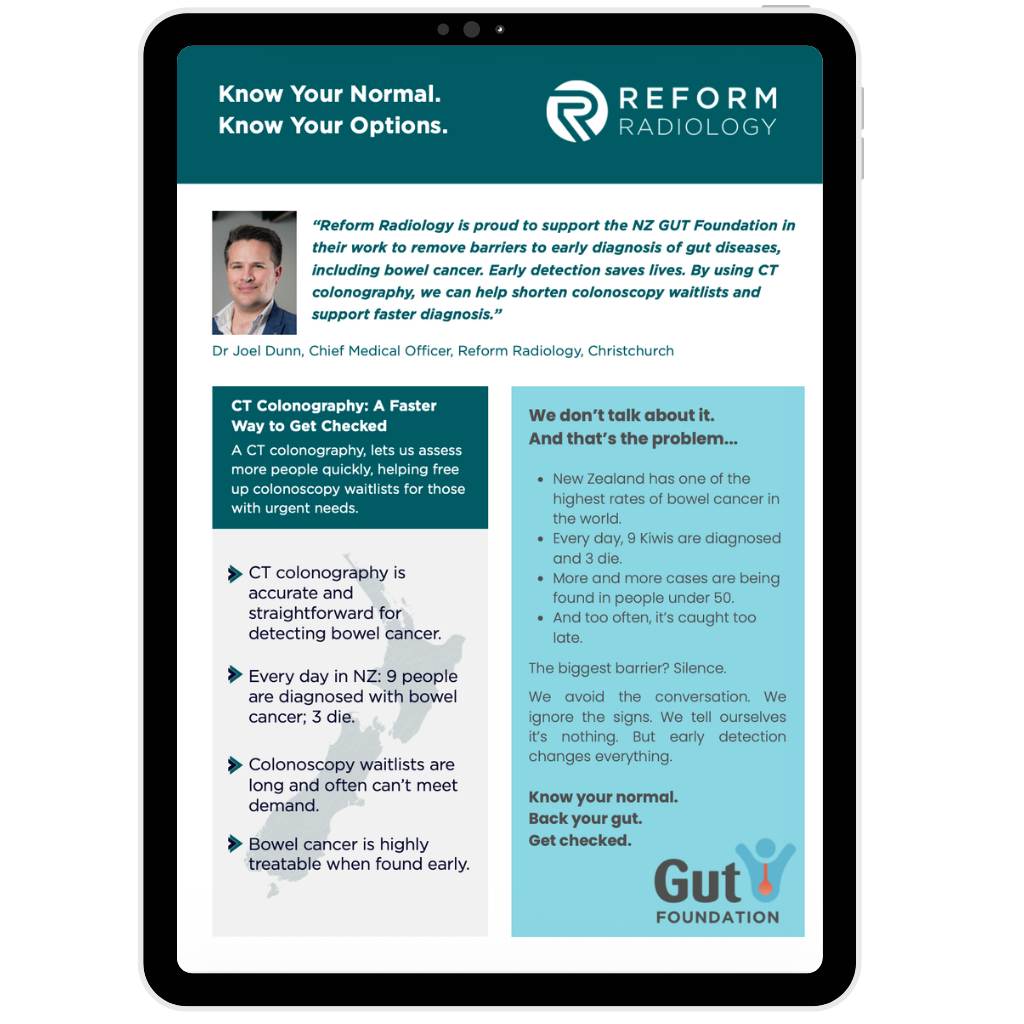
CT Colonography
The gut check most Kiwis don’t know exists.
Most of us have never heard of CT Colonography (CTC, for short). Here’s how it works:
- A CT scanner snaps hundreds of images of your bowel
- Software turns them into a detailed 3D map your specialist can fly through
- No sedation needed, so you can drive yourself home
- About a third of the cost of a traditional colonoscopy
- Available at specialist radiology clinics around the country
It won’t suit everyone, and if polyps show up, a colonoscopy is still the next step. But for many people, CTC is a genuinely good first option.
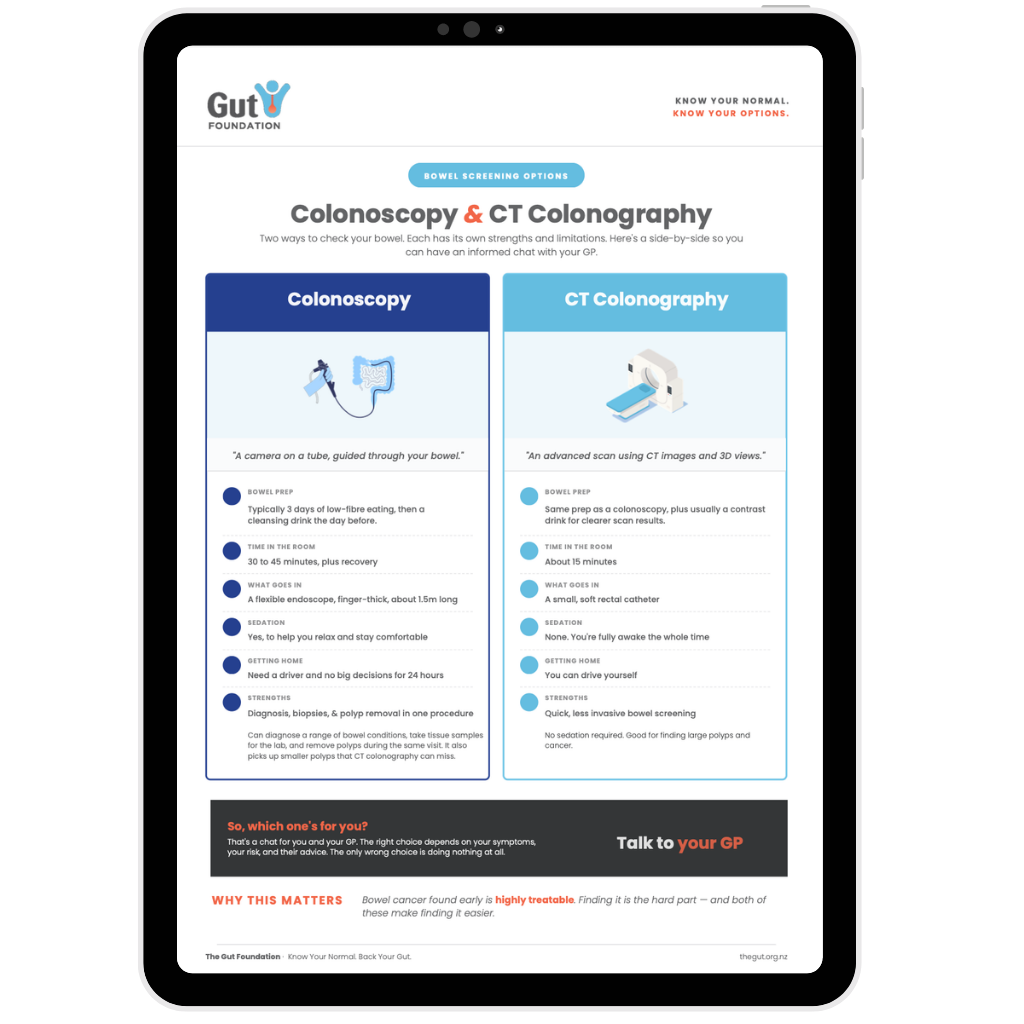
Colonoscopy or CT Colonography: which option is right for you?
Real talk: both involve bowel prep the night before (the stuff that makes you poo to clear you out), and something going up your bum (though one is a lot smaller than the other).
Where they differ is what happens next. Colonoscopy is the gold standard, your specialist can spot polyps and remove them in the same visit. CTC is a quick scan, no sedation, you drive yourself home in about 15 minutes.
The right call depends on your unique circumstances. Knowing the difference helps you have an informed chat with your GP.
Bowel Screening Kit
It’s free, it’s done at home, and it takes about two minutes.
The National Bowel Screening Programme sends a test kit to eligible Kiwis every two years. You collect a small sample of your poo on a stick (yep), pop it in a tube, and post it back. That’s it.
The test looks for tiny traces of blood you can’t see — an early warning sign that something might need checking. It’s not a cancer diagnosis. It’s a heads-up.
Who’s eligible?
People aged 58–74 who are eligible for publicly funded healthcare. You don’t need to sign up — when it’s your turn, a kit arrives in the mail. Haven’t received one? Call 0800 924 432 or visit the Health New Zealand bowel screening page.
What does a positive result mean?
First things first: a positive result does not necessarily mean you have bowel cancer.
The test picks up tiny traces of blood in your poo. That blood is most commonly caused by polyps (small growths) or other minor conditions like haemorrhoids. These are easily treated. Your healthcare provider will contact you to discuss your result and what happens next. If you have a family history of bowel cancer, you may also be referred to the New Zealand Familial Gastrointestinal Cancer Service.
Of people who have a colonoscopy through the programme:
- About 7 in 10 will have polyps (not cancer)
- About 7 in 100 will be found to have cancer
If your result is positive, you’ll usually be referred for a colonoscopy. A colonoscopy can find bowel cancer at an early stage — when it can often be successfully treated. That’s the whole point of screening: catching things before they become a bigger problem.
Not in the age range? A note of caution on pharmacy test
You might have seen bowel screening kits for sale at pharmacies or online. While it’s great that people want to be proactive, there’s an important catch: a positive result from a privately purchased kit doesn’t automatically entitle you to publicly funded follow-up testing, like a colonoscopy. That can leave you in a stressful spot — a concerning result with no clear next step.
If you’re outside the screening age range and want to get checked, your best option is to talk to your GP. They can assess your individual risk and refer you for the right testing through the right channels.
UniMed offers free bowel screening kits to eligible members regardless of age. Early detection saves lives, and UniMed is helping make it accessible. Find out more on their website.
Ask if your insurance provider provides this test!

Bowel cancer screening is just one part of gut health.
Your gut is complicated. Depending on your symptoms, there are a range of other checks your GP might recommend — from breath tests to gastroscopies to simple blood tests.
Other checks your GP may recommend
There’s a whole toolkit beyond colonoscopy and CTC. Here’s what else is out there.
Most gut issues aren’t cancer. They’re things like reflux, coeliac, SIBO, or inflammation, and each one has its own test. The list below is a good starting point for your next GP visit.
Breath Tests: Non-invasive tests for SIBO, lactose intolerance, and fructose malabsorption. Often done at home or in a clinic.
Gastroscopy: An upper endoscopy for the stomach, oesophagus and duodenum. Used to investigate reflux, ulcers, and upper gut issues.
Stool analysis: Beyond the bowel screening test — can check microbiome health, inflammation markers, and more.
Blood test: Iron, B12, folate, and CRP are useful markers for gut health. Often the first thing a GP will check.
Coeliac blood test: A simple test for coeliac disease — often missed for years because symptoms overlap with IBS.
Cancer’s not the only thing worth checking for. Don’t leave the GP without asking about your options.
Should I get a Gut Microbiome Test?
We get asked this a lot, and the short answer is: No.
Your microbiome is incredibly volatile. What you ate for dinner last night, your stress levels this morning, or a single workout can shift your microbial profile. A one-time stool sample provides a “snapshot” of a moving target, making it difficult to draw long-term health conclusions. Plus, scientists don’t yet know what a “perfect” microbiome looks like, so there is currently no clinical benchmark to compare your results against.
Bottom Line: Save your money. Until the science catches up to the marketing, these tests offer more “expensive curiosity” than actionable medical insight.
What is a gastroenterologist?
Big word, simple job. They’re the specialist your GP calls in when your gut needs the expert treatment. They do the colonoscopies, read the CTC scans, and diagnose the trickier stuff like IBD and coeliac.
Your GP is still your first stop. You’ll need a referral from them to book in.
Your GP: first assessment, blood tests, referrals, FIT test, managing ongoing conditions
Gastroenterologist: colonoscopy, diagnosing IBD, coeliac, specialist gut conditions, interpreting CTC results