Love their guts: the chat your whānau didn’t know they needed!
Good gut kōrero starts at the table. And it doesn’t have to be awkward.
Why this conversation matters
We surveyed 600 New Zealanders about how they really feel about gut health. The numbers speak for themselves.
The more we talk, the sooner we catch things — and the better we all feel. So let's start the kōrero.
Gut Health NZ Public Attitudes and Perceptions Study, Evolved Thinking, March 2026. 600 respondents, random NZ sample.
Start the kōrero
Many of us grow up thinking guts and poo are off‑limits – something you only talk about behind the toilet door. But one small, slightly awkward question could be the thing that gets your whānau talking, noticing changes early, and getting help sooner if something’s not right.
No need to turn dinner into a medical interview. Roll the dice, pick a question, keep it light.
Check your family history
Your whānau’s health history matters more than you think
Knowing whether close relatives have had bowel cancer, IBD or other gut conditions can change what screening you need and when. It’s not about worry — it’s about having the right information.
If any of these sound familiar, it’s worth mentioning to your GP:
Sharing food has always been about more than calories.
Eating together is linked with better mood, stronger relationships and healthier eating patterns across childhood and adulthood.
People who share meals more often tend to feel less lonely, more supported and more satisfied with life.
There’s not much point aiming to live to 100 if you don’t get to enjoy the food, people and moments along the way!
Your gut buddies also seem to enjoy company.
Studies suggest that people with close relationships and shared mealtimes often have more diverse microbiomes – which is usually a good thing. Diversity on the plate (lots of different plants, herbs and spices) helps build diversity in the gut, making it more adaptable and resilient.
Cultural traditions are a big part of this story
From hāngi to Sunday roasts, kai connects us to whakapapa, place and community, and can support wellbeing when we balance celebrations with everyday, mostly whole‑food choices. Exploring each other’s favourite dishes – and trying new foods together – is a simple way to feed both relationships and gut buddies at the same time.
Traditional fermented foods like homemade yogurts, pickles, and sourdoughs contain live microbes (gut buddies) which are shaped by the way your whānau prepares and looks after them.
Does your whānau know about the free bowel screening test?
If your whānau members are aged 58–74, they’re eligible for New Zealand’s free national bowel screening programme. The kit is posted to your home — you take a small poo sample, pop it in the prepaid envelope and send it back. That’s it.
Raise a kid who loves their gut buddies
70% of Kiwis can’t talk about gut health with their mates. Imagine if the next generation didn’t have that problem. It starts at home, with real words. Poo, bottom, bowel. If it’s normal to you, it’ll be normal to them.
Gut health is going to school
We’ve partnered with EATucation to bring gut health into classrooms across Aotearoa, impacting 200+ schools, 600+ teachers, 24,000+ students.
Want to see more of this learning at your kid’s kura? Check out EATucation.
Whānau packs: gut health for the whole family
We’ve teamed up with EATucation to create free take-home packs that bring gut health from the classroom to your kitchen table. Recipes, activities, and te reo kai included.
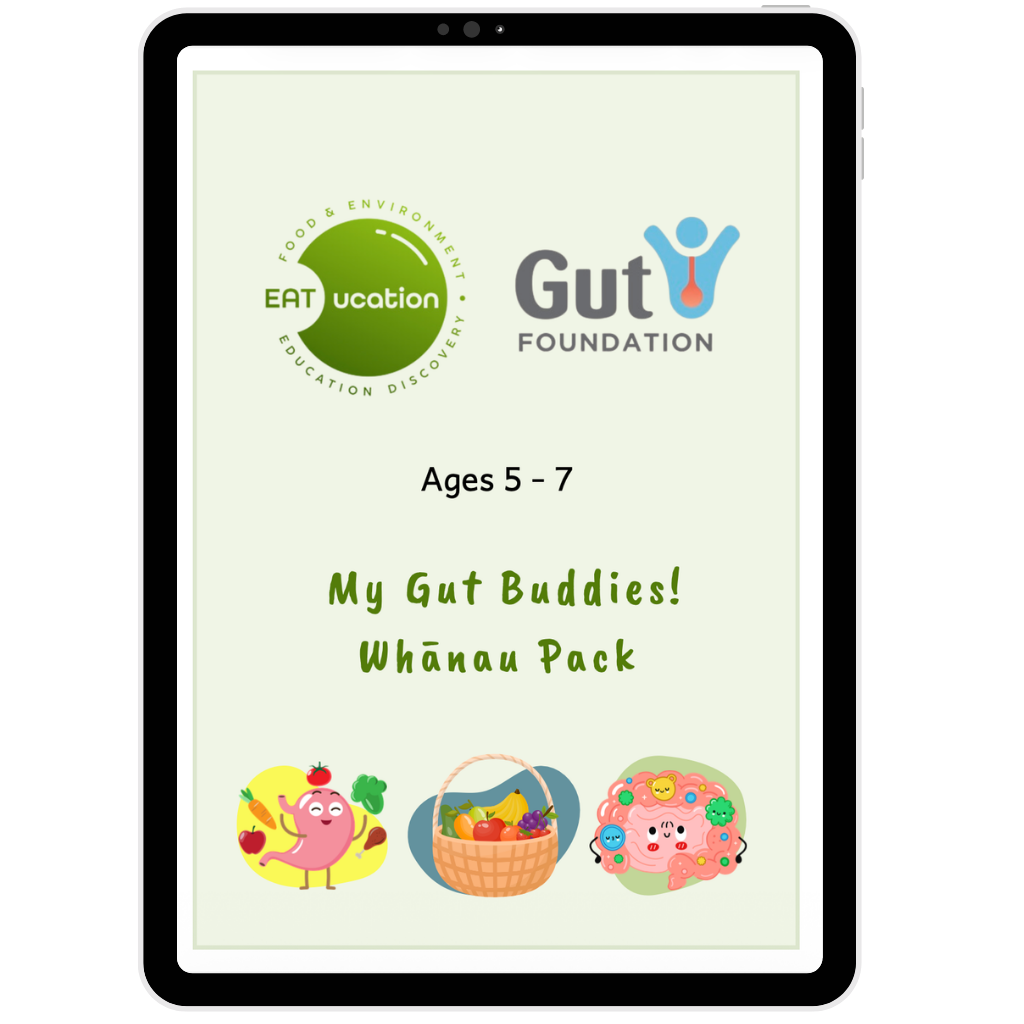
My Gut Buddies! — Ages 5–7
Meet Biff, Lacy, Bax, and Roz. Berry bark recipe, veggie nuggets, eat the rainbow tracker, and kai connection challenges for little learners.
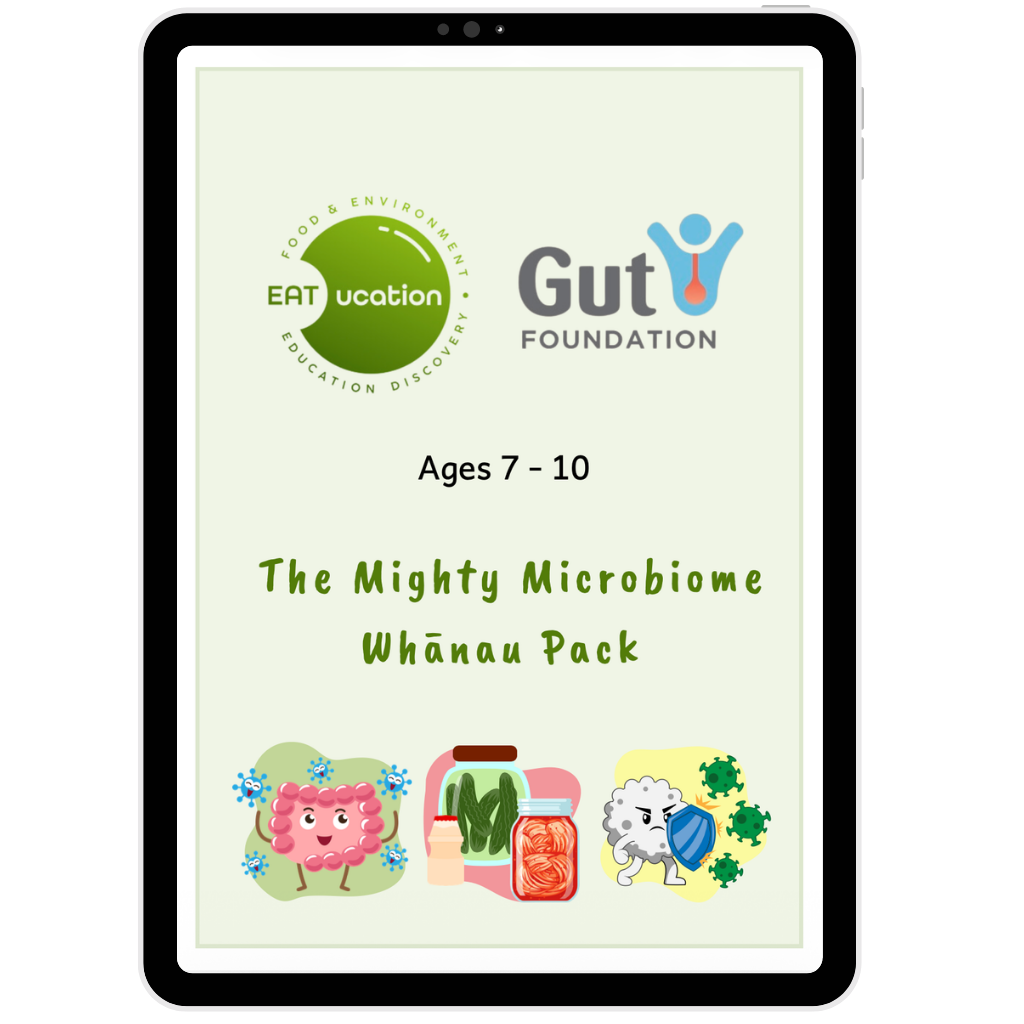
The Mighty Microbiome — Ages 7–10
Your child becomes the manager of their own microbial city. Rainbow fried rice, mighty berry mug cake, mood food connection, and te reo kai vocabulary.