
Your poo tells a story. Here’s how to read it.
Most people never think about their poo — until something changes. Here’s how to know what’s normal, what’s not, and what to do about it.
The Bristol Stool Chart: The official scorecard for your poo
Not all poos are created equal. Use the Bristol Stool Chart to decode your digestive health. It breaks down the shapes and sizes of your business into seven types, helping you figure out if you’re hydrated, need more fibre, or if it’s time to chat with a doctor.

Standard version for adults

Kid-friendly version
Take the 30-Day Gut Check
Don’t just check it once and forget it. Use the video and the chart to track your “output” for the next 30 days to spot patterns.
Identifying a trend early is the best way to stay on top of your gut health.
The Bristol Stool Chart: In Chocolate
You’ll never look at chocolate the same again.
Sorry. Not sorry. We had a little fun recreating the different types on the Bristol Stool Chart… but here’s the serious bit.
Your poo is one of the simplest ways to check in on your gut health. It’s essentially a daily report card from your digestive system. Ideally, you’re looking for something smooth, sausage-like, and easy to pass. You shouldn’t be straining over hard pellets, and it shouldn’t be an urgent sprint to the toilet either.
Hard and lumpy? This usually means slow “transit time.” You likely need more hydration, movement, and fibre to get things migrating.
Loose or watery? Your gut might be irritated or moving too fast. Interestingly, you may still need fibre to help soak up excess water and add structure.
Start paying attention. Your body is giving you feedback. 💩👀
What does normal look like for you?
Everyone’s ‘normal’ is different’ but it is important to understand yours. For example, with frequency, the range that is considered medically normal is anywhere from pooping 3 times a day to once every 3 days.
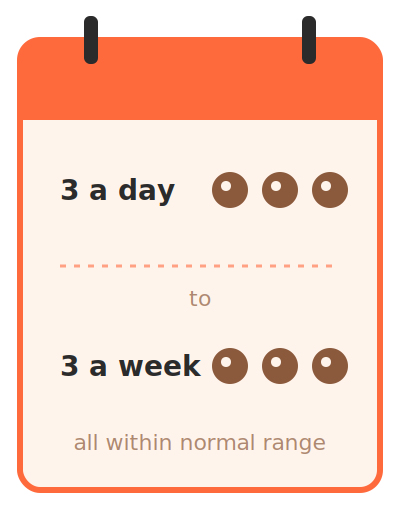
FREQUENCY
3 times a day to 3 times a week is all within normal range.

CONSISTENCY
Smooth and sausage-shaped is the gold standard.
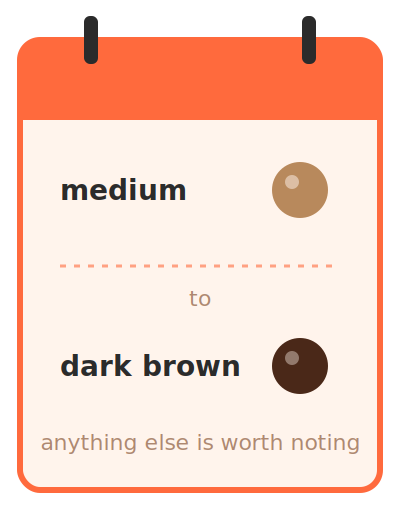
COLOUR
Medium to dark brown is typical. Anything else is worth noting.
Are you a bit weird about poo?
Most of us are. And it turns out that awkwardness isn’t harmless. Our own research shows it’s stopping Kiwis from having conversations that could catch problems early. Let’s fix that, starting with you.
How awkward are you?
Be honest. We’ve all got a number.
1
😚
2
🙂
3
😬
4
😳
5
🫣
How to stop being weird about it
Reflect on where your awkwardness comes from
Were you raised not to talk about bodies? Did someone shut you down once? Awkwardness usually has a history. Noticing it is the first step to getting past it.
Remind yourself these are just body parts
Anus. Bowel. Stool. They're medical terms for normal parts of a normal body. A GP uses them fifty times a day. The more familiar they become, the less power they have.
Learn from a reputable source
The Gut Foundation has everything you need to understand your gut health. Start here, go deeper. Knowledge makes the conversation easier, with yourself and with your GP.
Book a GP appointment
You don't need a reason. You don't need a serious symptom. You just need to book. Five minutes online, done.
Go to the next page
This one was just for you. The next one is about talking to the people around you. When you're ready.
Checking your poo is not just about cancer.
Most of the time, it’s something simple. Changes in your poo can point to all kinds of things, and cancer is rarely the answer. Here’s what’s more commonly going on:
- IBS and stress — Your gut and brain are in constant conversation. Stress, anxiety, and routine changes can throw your bowel habits off.
- Food intolerances — Sudden sensitivity to dairy, gluten, or fructose is incredibly common, and it can cause bloating, urgency, and a lot of confusion.
- Stomach bugs — A viral gut bug can leave your microbiome out of whack for weeks, even after you feel back to normal.
If something’s been off for more than a couple of weeks, book in with your GP. They’ve heard it all, and embarrassment is the only real barrier to getting it sorted.
Signs worth taking seriously
Most gut changes are nothing to worry about. But a few patterns are worth acting on quickly, because early is always easier to treat than late.
Blood in your poo Don't wait
If it's happened twice or more, it's worth a chat with your GP.
Changes in your poo lasting more than 2–3 weeks
New frequency, consistency, or urgency that's sticking around. If it's not settling, get it checked.
Pain or cramping that won't go away
Persistent abdominal pain or cramping that's new to you, especially if it's getting worse.
Unexplained weight loss
Especially alongside any bowel changes. Worth mentioning even if you feel fine otherwise.
Family history of bowel cancer
If a close relative has had it, tell your GP. You may need to start screening earlier than everyone else.
Call your GP and get an appointment as soon as you can. Appointments can take a while, so the sooner you call, the better. Don't put it off.
9 diagnoses a day. You do the maths.
Bowel cancer in New Zealand: the numbers
Early detection changes everything. The difference between stage 1 and stage 4 is the difference between 9 in 10 surviving and fewer than 1 in 7.

A big thanks to Purex for helping spread the word
Purex has been in Kiwi bathrooms for decades. Now they’re helping save lives in them too.
Keep an eye out for the Gut Check QR code on specially marked packs!
Are you a good pooper?
Pooping is a lot like dancing — everyone thinks they’re good at it, but most of us could use a few lessons.
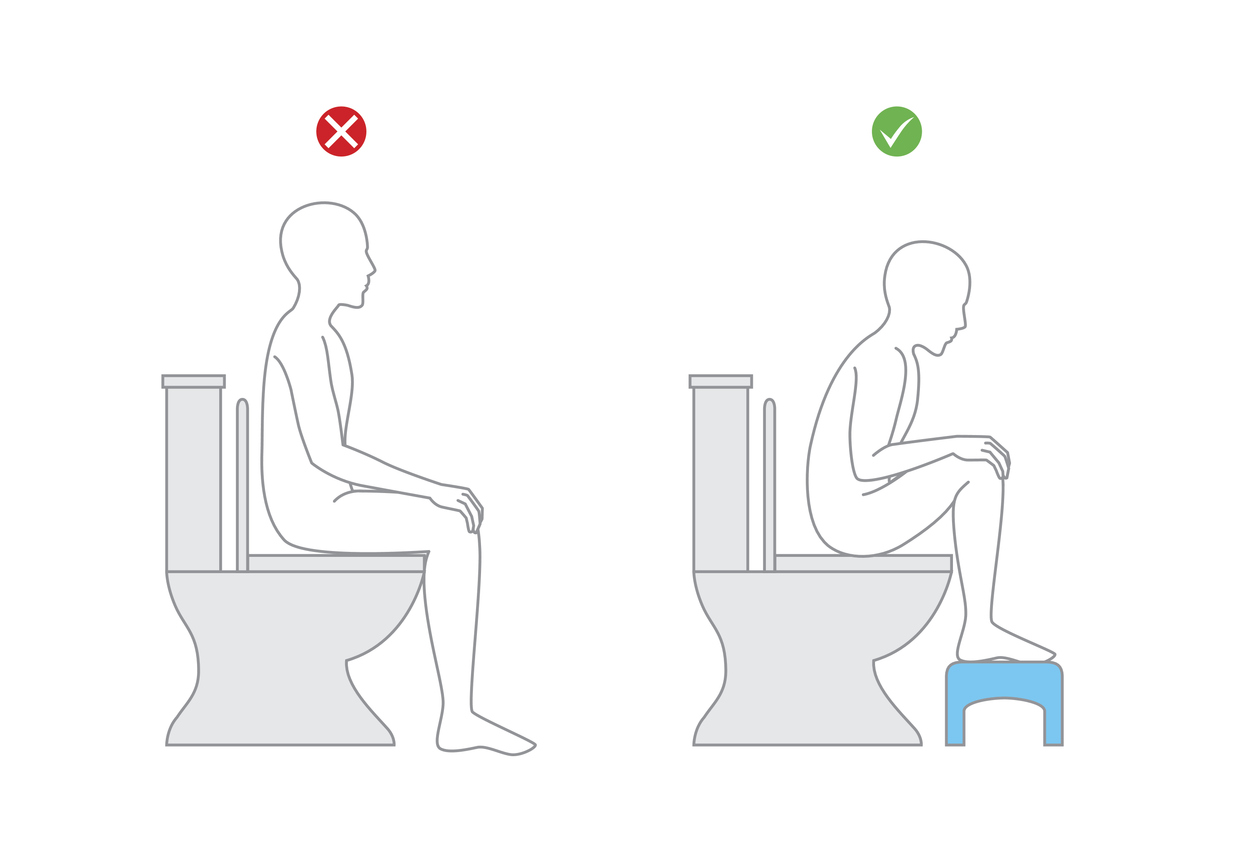
Fun fact: your body was literally designed to squat. Somewhere along the way we invented the sitting toilet and just hoped for the best. Spoiler — it wasn’t the best. Countries with sit-down loos tend to have more bowel trouble than those that squat. But don’t panic, you don’t need to rip out the porcelain. A few tweaks and you’ll be pooping like a pro.
1. Get your knees above your hips.
Grab a foot stool, an old phone book, a shoe box — whatever does the job. Glamorous? No. Effective? Very.
2. Lean forward and plant your elbows on your knees.
Think “The Thinker” statue, but on the loo. Relaxed and slightly hunched — not scrolling-your-phone upright.
3. Straighten your back and let your belly relax outward.
Gently push below the belly button. We know it feels weird. Do it anyway.
4. Drop your shoulders and breathe.
This isn’t a deadlift. Relax everything from the shoulders down and let gravity do the work.
Think you’ve nailed it? Rate yourself. And if someone you love is still sitting bolt upright and scrolling their phone… share this page. Friends don’t let friends poop wrong.
Why bother? 1.2 Billion people can’t be wrong
In cultures where squatting is the norm, hemorrhoids and diverticulitis (painful “potholes” in your gut) are almost unheard of.
While we’ve spent the last century pretending our bodies were meant to sit on “thrones,” 1.2 billion squatters worldwide have been doing it right all along.
Unkink the hose: Sitting keeps your colon partially “hitched.” Squatting opens the floodgates.
Lower the pressure: Straining while sitting is like trying to force a cork out of a sealed bottle. Squatting lets gravity do the work.
Save time: Squatters finish in under a minute. If you’re sitting there long enough to finish a Sudoku, you’re doing it wrong.